
OnlyFans Wallet Credits: When to Use Them Instead
OnlyFans wallet credits are a prepaid balance you load before spending, and they behave differently from a card charge in several practical ways. Many subscribers treat the two as interchangeable, then get confused when a refund, a cancellation, or a price change plays out unevenly.

The core difference is timing. A card charge happens at the moment of purchase, while a wallet top-up happens earlier and sits as a balance until you spend it.
The platform itself does not offer a discovery feed or a public directory, which is one reason third-party ranking sites exist. Without an in-app browse system, subscribers often find pages through search, social links, or curated lists.
What the OnlyFans Wallet Actually Does
A wallet is stored value. You add funds once, and the balance is drawn down each time you subscribe, tip, or unlock a pay-per-view item.
Paid subscriptions on the platform run from a $4.99 minimum to a $49.99 maximum. Most paid pages sit in the $4.99 to $15 band, and the platform-wide average lands somewhere between $5 and $10.
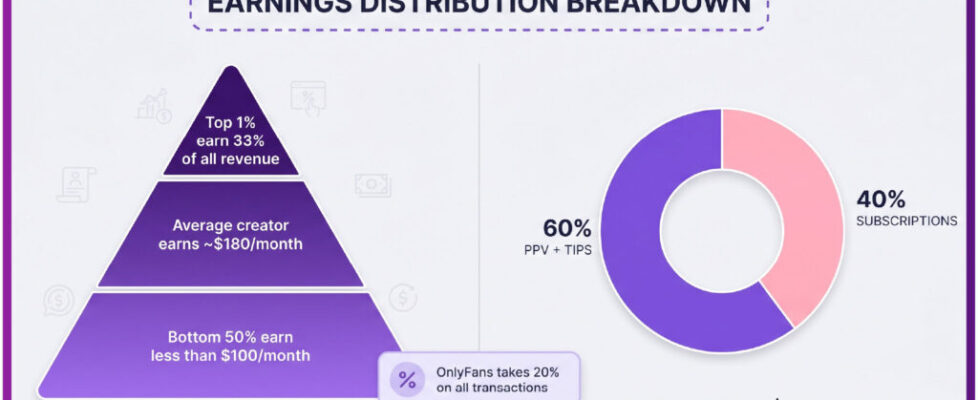
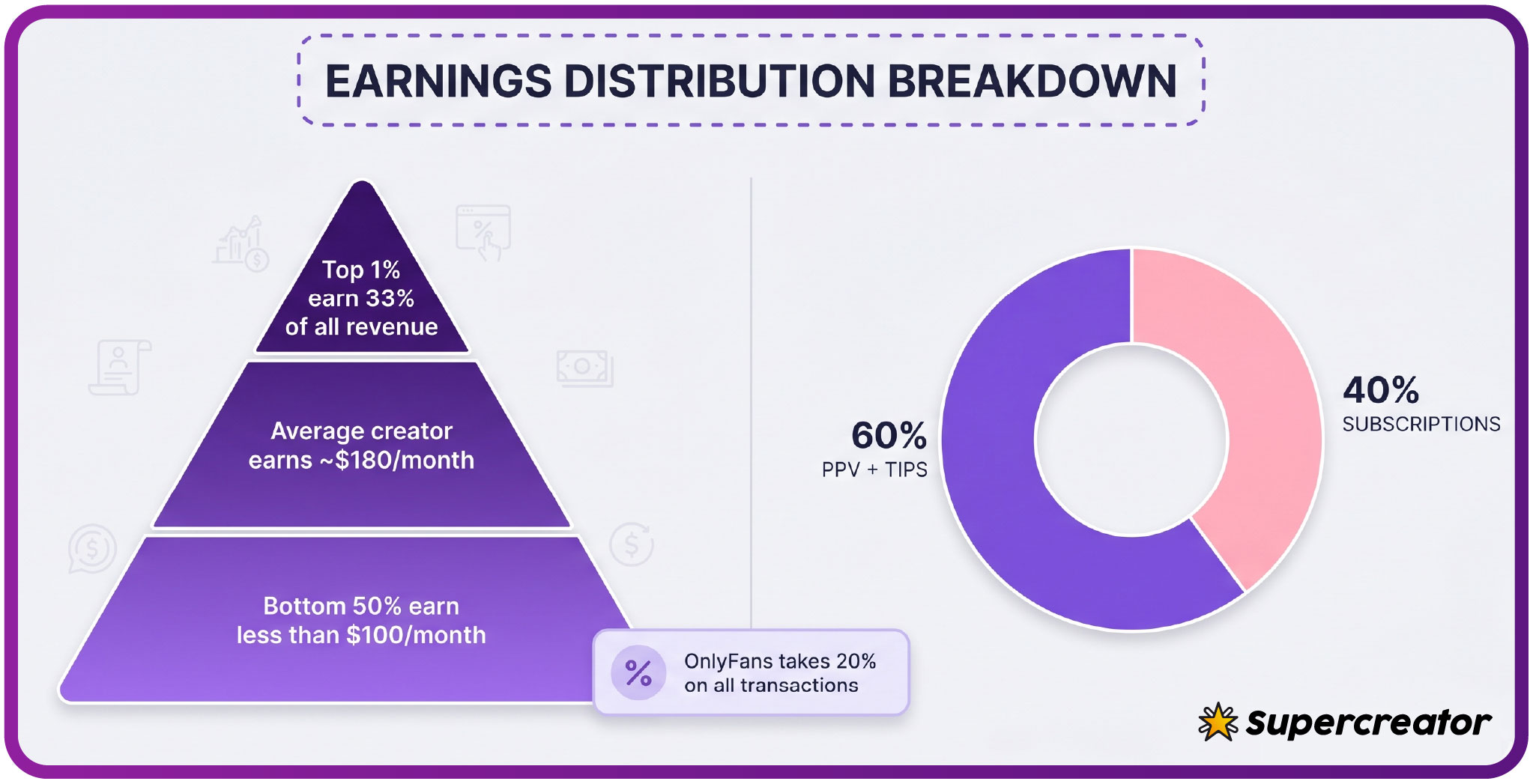
Whatever the price, the platform fee is 20% on everything, meaning subscriptions, tips, and pay-per-view unlocks all carry the same cut. The creator keeps 80%.
- A single $4.99 subscription at the minimum price point.
- Three subscriptions averaging $5 to $10 each, the typical range.
- One mid-tier page at $15, near the top of the common band.
- A one-off tip or pay-per-view unlock on a free page.
- Any top-up fees your payment provider adds when loading the balance.
Month-to-month costs vary more than most people expect because subscriptions renew quietly and tips are spontaneous. A wallet converts that unpredictability into a single, known number.
How Credits Apply to Subscriptions, Tips, and Unlocks
Wallet funds are general-purpose on the platform, but they are not universal. They cover most spending inside the account, yet they do not replace every payment method in every situation.
- Recurring subscriptions to paid pages, at any price from $4.99 to $49.99.
- One-time tips sent to free or paid creators.
- Pay-per-view unlocks and paid direct messages.
- Renewals that were already active before the balance ran low.
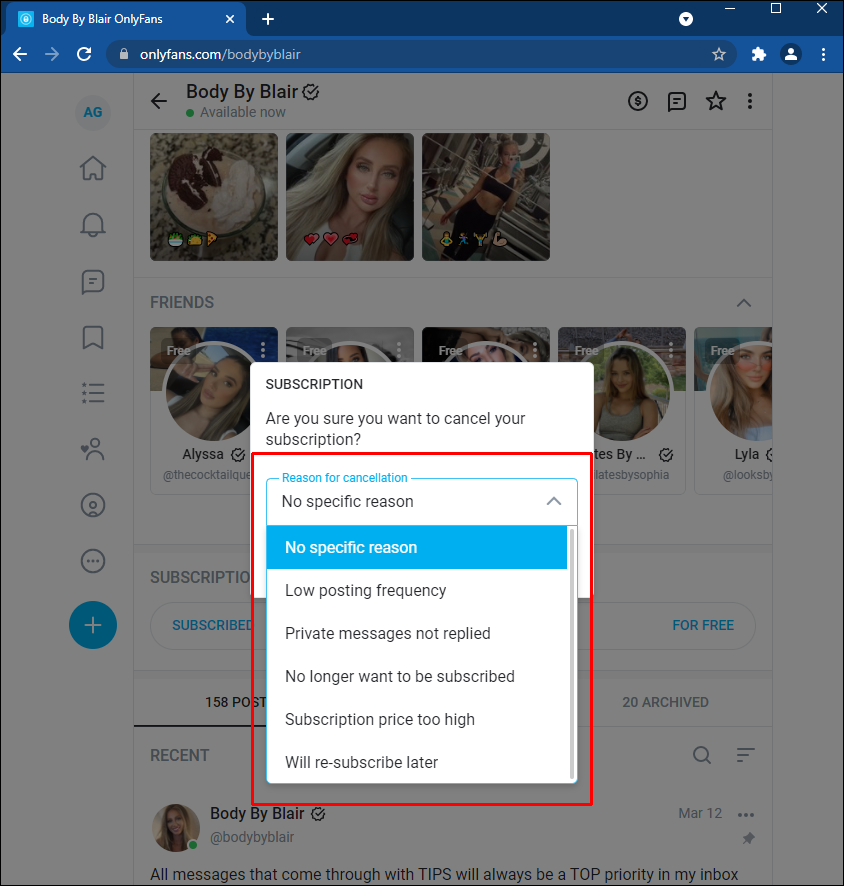
What wallet funds generally cannot do is bypass the platform’s own billing rules. If a creator raises their subscription price, auto-renew stops automatically.
This is a deliberate design choice rather than an oversight. It protects subscribers from price changes they never agreed to, and it means a stored balance is never drained by a renewal you did not confirm.
Practical tip: check your active renewal list before topping up a wallet. A balance that looks sufficient can be committed to subscriptions you have forgotten about, leaving nothing for the purchases you actually intended to make.

Refund Handling Differences
Refunds are where the two payment routes diverge most sharply. A card charge creates a transaction record with your bank, which opens dispute channels that a stored balance simply does not have.
If a creator fails to deliver what was promised, a card payment can be contested through your issuer under chargeback rules. The same purchase funded by wallet credit usually has to go through the platform’s own support process first.
| Scenario | Wallet outcome | Card outcome |
|---|---|---|
| Creator stops posting | Support request; credit may be returned to balance | Chargeback possible after contacting support |
| Accidental tip sent | Refund at platform discretion | Dispute with issuer as a last resort |
| Duplicate charge | Balance corrected after review | Issuer can reverse the duplicate quickly |
| Unused credit after cancelling | Stays in the account until spent or withdrawn | Not applicable; no stored value exists |
The pattern is consistent: the card route gives you an outside party, and the wallet route keeps everything in-house. Neither is automatically better, but the difference should shape how much you load at once. A large balance concentrates risk inside a single system.
Spending Visibility and Cap Control
A wallet balance is a visible number, and visible numbers change behaviour. When the only limit is a card with a high ceiling, spending tends to follow curiosity. When the limit is a balance you topped up yourself, every purchase has an obvious opportunity cost.
That makes a wallet a natural spending cap, though not a perfect one. Nothing stops you from topping up again, and the top-up itself may carry fees depending on your provider. The cap works only if you treat the initial load as the budget for the period and resist refilling it mid-month.
- Topping up reflexively the moment the balance hits zero.
- Losing track of auto-renewals that consume the balance first.
- Forgetting that tips and unlocks draw from the same pool.
- Assuming a low balance means renewals will simply pause without notice.
- Loading a large amount before checking whether the pages you want are still active.
On a shared device, a wallet has an extra advantage: the balance is tied to the account rather than to a card sitting in a wallet app. There is no stored card number to reuse and no statement line to explain. That privacy benefit is real, but it comes with the refund trade-off described above. For a starting point, best onlyfans hashtags for tiktok collects free pages.
Where Wallet Credits Fall Short
Wallet credit is convenient, not frictionless. Every top-up is a separate action, and each one may involve a minimum amount set by your provider. That friction is intentional on the payment side, but it can interrupt a purchase you wanted to complete immediately.
- Top-up friction: an extra step before every spending session.
- Partial leftovers: small balances that are too low to buy anything useful.
- Limited dispute routes when a creator does not deliver.
- No external record, which makes budgeting harder to audit later.
- Withdrawal rules that may not return a balance to your original card.
Leftover balances are the most common annoyance. If you cancel a subscription with credit remaining, that credit does not vanish, but it also does not return to your bank automatically. It sits in the account, waiting for a future purchase or a formal withdrawal request.
Card Billing Versus Wallet: A Side-by-Side
The right choice depends on which column matters more to you. Subscribers who value dispute rights lean toward cards, while those who value a hard ceiling and cleaner privacy lean toward wallets. Both pay the same 20% platform fee and the same creator price.
| Factor | Card billing | Wallet credits |
|---|---|---|
| Dispute rights | Issuer chargeback available | Platform support only |
| Statement clarity | Separate line per charge | One line per top-up |
| Privacy on shared devices | Card details stored in account | No card reused per purchase |
| Spending cap | Set by the card limit | Set by the loaded balance |
Statement clarity is often misunderstood. A card produces many small lines, which is noisy but auditable. A wallet produces fewer lines but hides the individual purchases behind top-ups, which can make a monthly review harder to reconstruct.
Privacy works the opposite way. Card billing means your details live in the account and are reused for each transaction. Wallet funding means the card is touched less often, though the top-up itself still appears somewhere on your provider’s record.
If you promote or research pages, hashtags and discovery tools matter more than payment method, and the best onlyfans hashtags for tiktok are worth reviewing separately from this topic. BestOnlyFans ranking pages are a common starting point for that kind of research.
When Wallet Use Makes Sense
Wallet credits suit subscribers who want a hard boundary more than they want flexibility. The following scenarios tend to benefit most from prepaid funding rather than per-transaction card billing.
- Strict budgeting: one monthly load, no refills until the next period.
- Shared devices: fewer stored card details and less to explain.
- Prepaid card users: a top-up converts an awkward payment method into usable credit.
- Gift or allowance situations: a fixed balance is simple to hand over.
- Testing the platform: a small balance limits exposure while you learn how it works.
In each case the goal is the same: convert an open-ended spending channel into a finite one. BestOnlyFans-style directories make it easier to plan which pages are worth that budget before you commit, which is exactly the moment a wallet decision should be made.
Anyone who genuinely wants chargeback protection should not rely on a wallet alone. Keeping at least the highest-value subscription on a card preserves an outside dispute route for the purchases that matter most. Mixing methods is a reasonable strategy, not a contradiction.
Closing a Wallet or Leaving a Balance
Unused credit is not lost when you stop subscribing, but it does not follow you out automatically either. It remains attached to the account until you spend it or request a withdrawal through the platform’s support process. That request may be subject to rules your provider applies.
Before closing anything, spend down or withdraw the balance deliberately. Small leftovers are easy to forget and rarely worth a support ticket on their own, which is why periodic cleanups are sensible. Treat the balance like a gift card rather than a bank account.
If you do plan to stop using the platform, cancel active renewals first and confirm each one has ended. Wallet credit will not keep a cancelled subscription alive, but it will sit there quietly until you act. BestOnlyFans-style guides are useful for tracking which pages you still follow, but the balance itself is your responsibility.
FAQ
Do wallet credits expire?
They remain attached to your account rather than expiring on a fixed date, but withdrawing an unused balance usually requires a support request, so spend or withdraw it deliberately before you stop using the platform.
Can I get a refund to my wallet instead of my card?
Yes, in some cases credit is returned to your balance rather than your card. If you paid by card, your issuer may still offer a chargeback route, which a wallet-funded purchase generally does not have.
Does a wallet balance stop auto-renewals?
No. Renewals continue as normal while the balance covers them. What stops auto-renew is a creator raising their subscription price, in which case access lasts until the current paid period ends.
Are wallet top-ups charged the 20% platform fee?
The 20% fee applies to subscriptions, tips, and pay-per-view unlocks, with the creator keeping 80%. Top-up mechanics depend on your payment provider and are separate from that transaction fee.